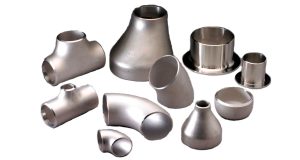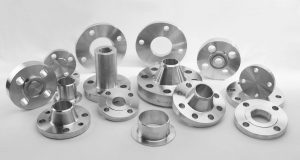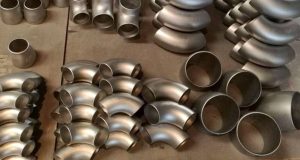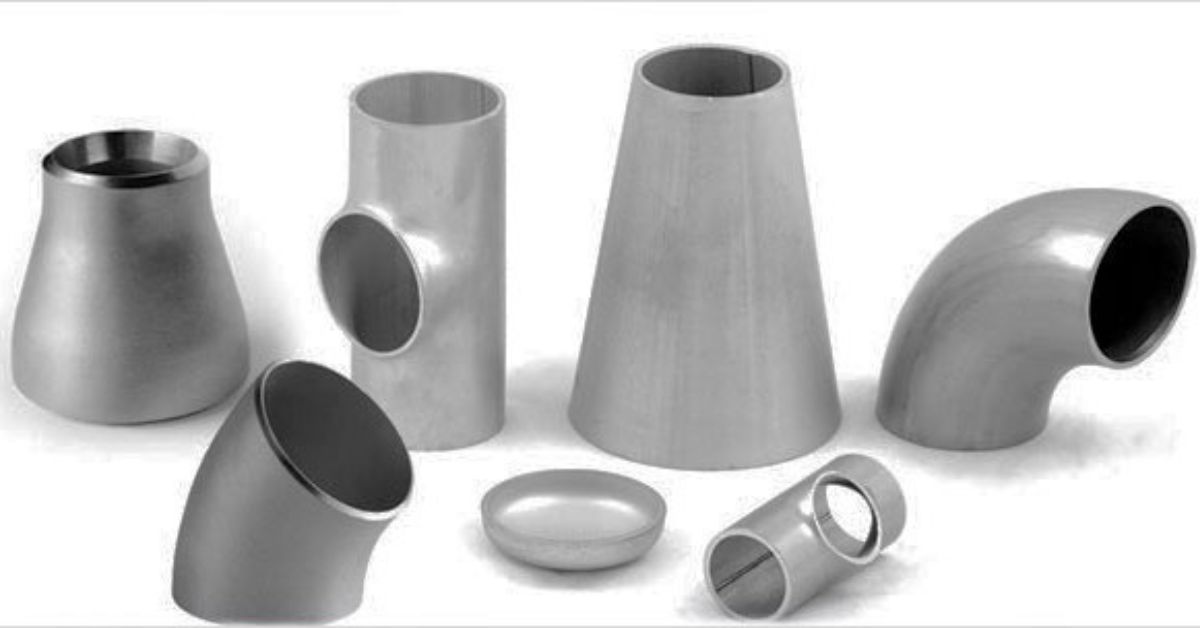
Buttweld fittings are important parts of piping systems that are used in many fields. They help change the flow’s direction make the pipes bigger or smaller and connect different parts of the pipeline. When these fittings are welded directly to pipes you get a strong joint that doesn’t leak. This is why they are often used in places where safety, temperature and pressure are important. Stainless steel buttweld fittings are very common in tough situations. They are very strong, will not rust, and have a long life cycle, therefore they are considered safe for crucial operations. Buyers are informed about the quality and performance of the best fittings by knowledge of the manufacturing process of these fittings.
Types of Raw Materials Used in Buttweld Fittings
Buttweld fittings are produced from several metal grades depending on service needs. The different materials used include:
- Carbon steel
- Alloy steel
- Stainless steel
- Nickel alloys
Each material has its own chemical and mechanical properties.
Carbon steel is selected for strength and cost control. Alloy steel works well under high pressure and temperature. Nickel alloys are chosen for extreme corrosion and heat resistance. Stainless steel is used where cleanliness and corrosion resistance are required. The selection of the right grade is greatly influenced by the operating temperature, pressure load, corrosion behavior and hardness. The material you pick determines the durability and safety of the fitting during usage.
Raw Materials Used in Manufacturing
Buttweld Fittings are mostly produced with a stainless steel material. Out of the different grades, 304, 304L, 316, and 316L are the ones that are mostly accepted. Stainless Steel 304 is the best material for Butt weld Pipe Fittings in stainless steel.
Stainless Steel 304 offers good corrosion resistance in many environments. It performs well in water systems, food plants, and chemical lines. The material has good strength and can handle moderate temperature ranges. Its weldability is another reason for its wide use. Stainless Steel 304 Buttweld Fittings are a common choice in many fields as they are strong, affordable and work well.
Sourcing and Material Standards
Manufacturers get their raw materials from steel mills that have been approved. These materials must meet international standards like ASTM, ASME and ANSI. These standards indicate the chemical composition, tensile strength and impact values. Following these standards ensures uniform quality and repeat performance. Material test certificates confirm compliance and traceability. For any SS Buttweld Fittings Supplier, standard compliance is essential to meet project and export needs.
Preparing the Raw Material
Before forming begins, raw material preparation is critical. Steel pipes or plates are cut to required lengths using saw cutting or plasma cutting. Surface impurities such as scale, oil, or rust are removed. The material edges are prepared for forming and welding. At this point, dimensional precision minimizes the occurrence of defects in the future. Accurate processing leads to Stainless Steel Buttweld Fittings that are within the tolerances and have the necessary strength.
Forming Methods in Buttweld Fittings Manufacturing
The forming stage is when pipes or plates that are straight are shaped into fittings. Different methods are used depending on the size, type and thickness of the fitting.
- Hot Forming :- Hot forming uses heat to soften steel and make it easy to shape. The material is heated to a controlled temperature and then formed using dies or presses. This method is commonly used for elbows, reducers, and tees. It allows smooth flow paths and uniform wall thickness. Hot forming is widely used for Stainless Steel Buttweld Fittings of larger sizes.
- Cold Forming :- Cold forming shapes the material without heating. Mechanical force is applied using presses or rollers. This method offers better dimensional control and surface finish. Manufacturers prefer cold forming when tight tolerances are required. It is often used for smaller fittings and thin-wall applications.
- Mandrel Method :- When bending the mandrel method uses an internal support. A mandrel is put inside the pipe to keep the shape. This stops the fabric from getting thin and wrinkled when you bend it. This technique is common for Stainless Steel 304 Buttweld Fittings that need clean internal surfaces. It ensures smooth flow and accurate bend radius.
- Extrusion and Pressing :- To make complicated shapes, you can use extrusion and pressing. To make the right shape, metal is pushed through a die during extrusion. To make branches and outlets, pressing uses shaped dies. These methods help achieve consistent wall thickness and structural strength. They are often used for tees and special fittings.
Heat Treatment Processes
Heat treatment improves the properties of Stainless Steel Buttweld Fittings. Forming processes introduce stress into the metal. Heat treatment removes this stress and restores structure. Common methods involve annealing and solution treatment. Annealing makes the material more ductile and tougher. Solution treatment, on the other hand, helps the material resist corrosion by making the alloy structure more stable. With correct heat treatment, the material will have a long service life and be able to operate reliably under harsh conditions.
Machining and Final Shaping
After forming and heat treatment, fittings undergo machining. This stage refines dimensions and prepares ends for welding. Beveling is done as per standard angles. Machining ensures that Stainless Steel Butt weld Pipe Fittings fit accurately during installation. Correct angles and smooth edges reduce welding defects and improve joint strength.
Surface Finishing
Surface finishing improves appearance and corrosion resistance. Common processes include pickling, passivation, grinding, and polishing. Pickling removes heat scale and oxide layers. Passivation enhances the natural corrosion-resistant layer of stainless steel. Grinding and polishing create smooth surfaces. Stainless Steel 304 Buttweld Fittings often require fine finishes for food, pharma, and clean water systems. Smooth surfaces reduce contamination risk and ease cleaning.
Quality Testing and Inspection
Quality control guarantees that every part goes through the same design and safety standards. Surface defects are checked through visual inspection. Size and tolerance are confirmed through dimensional inspection. Hydrostatic testing checks pressure resistance. Non-destructive tests such as ultrasonic and dye penetrant detect internal or surface flaws. Material certification verifies grade and chemical composition. A reliable SS Buttweld Fittings Supplier provides full inspection records with every shipment.
Packaging and Dispatch
After inspection, fittings are cleaned and marked with grade, size, and heat number. Protective caps are placed on ends. Fittings are packed in wooden crates or pallets. Proper packaging prevents damage during handling and transport. Export shipments follow international packing standards.
Industrial Applications of Buttweld Fittings
- Buttweld Fittings are used in oil and gas pipelines for strength and leak prevention. Petrochemical plants use them for high-pressure and high-temperature services.
- Food processing and pharmaceutical plants rely on Stainless Steel Buttweld Fittings for hygiene. Water treatment systems use them for corrosion resistance. Construction and power projects also depend on these fittings.
- Stainless Steel 304 Buttweld Fittings are preferred in corrosive and clean environments due to their stable performance.
Buttweld Fittings are made with careful control at every step. Every step, from choosing the raw materials to shaping, heat treating and inspecting, affects quality.
Using the right grade like Stainless Steel 304, ensures it lasts and is safe. Strict tests and standards prove that it is reliable. All Stainless Steel Butt Weld Pipe Fittings need to be produced properly and have quality checks done on them to work well for a long time.